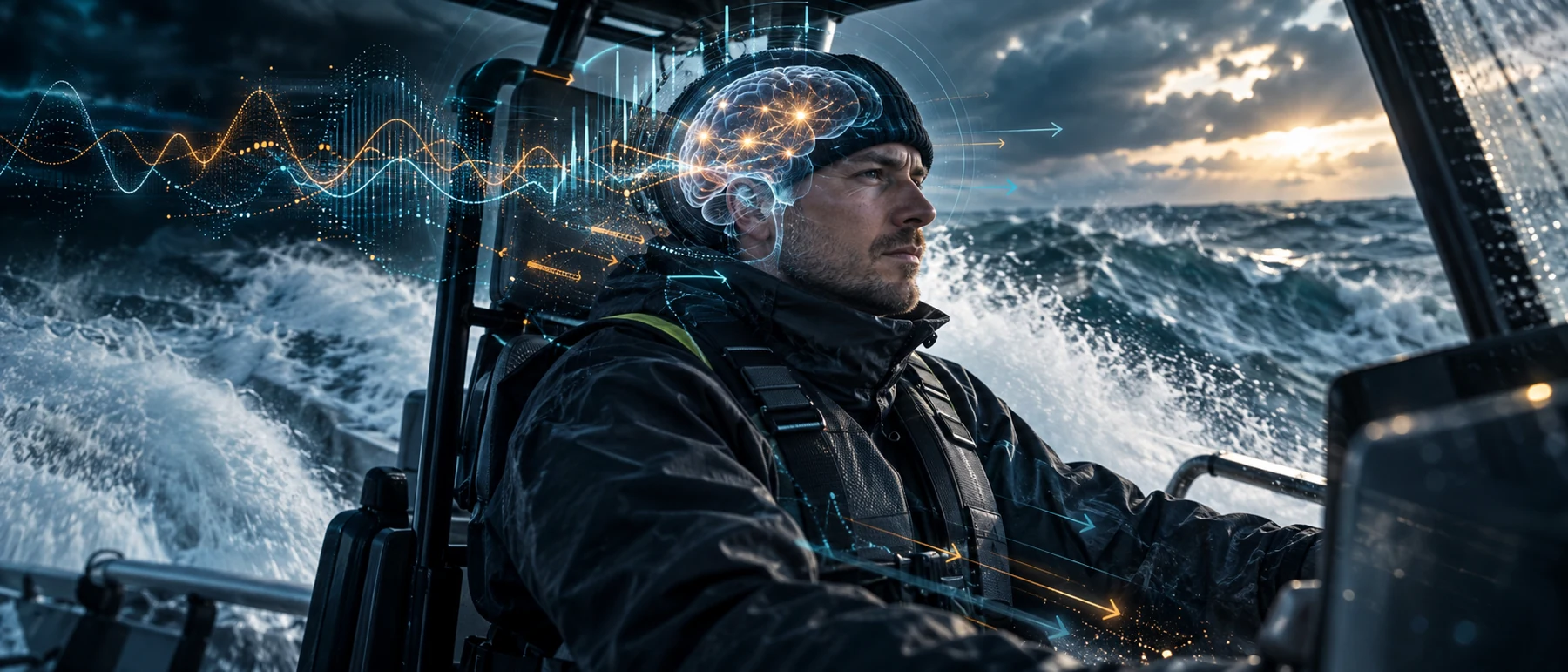
Cognitive assessment & exposure insight
Manage mental wellbeing.
Connect person-linked cognitive assessments with the journeys, WBV and impacts they experienced—creating a clearer evidence trail for review and follow-up.
Explore cognitive assessment
Marine WBV & vessel impact monitoring
VIMMS measures whole-body vibration, impacts and vessel motion in real time — giving operators useful feedback at the helm and managers clear evidence ashore.
Maritime Systems field work · high-speed craft monitoring
Installed hardware
At-sea trials
Operational dashboards
Fleet evidence
Evidence from the field
VIMMS has grown through practical measurement work—installing equipment, recording vessel and seat response, and turning the results into information that operators can use.


Cognitive assessment & exposure insight
Connect person-linked cognitive assessments with the journeys, WBV and impacts they experienced—creating a clearer evidence trail for review and follow-up.
Explore cognitive assessmentThe VIMMS platform
The conditions at sea change by the minute. VIMMS keeps the measurement chain connected: crew, vessel, journey and fleet.
The result is more than a peak number. It is a time-based record of what happened, where it happened and what the people on board were exposed to.
Purpose-designed sensors capture continuous vibration, discrete impacts, vessel motion and seat response at the point that matters.
A calm live display gives the operator immediate feedback without taking control away from the person driving the vessel.
Fleet and journey views bring together exposure, impacts, speed, position and operational context for review and action.
A critical distinction
A vessel can record few severe impacts and still expose its crew to high levels of continuous vibration. One measurement cannot be used as a substitute for the other.

Peak acceleration, impact count and severity identify individual shock events and how often they occur.

Frequency-weighted RMS, VDV and daily exposure A(8) describe continuous vibration across the working period.
One connected view

Clear live information designed to be understood at a glance in a demanding working environment.
Journey, crew and fleet evidence that helps identify patterns, compare operation and document action.
Time-synchronised motion, impact and seat data for understanding the vessel–seat–occupant system.
Workboat Code 3 & WBV
Managing vibration risk starts with measuring crew exposure using the right metrics. VIMMS supports ISO 2631-1 whole-body vibration assessment while retaining the separate impact record needed to understand high-speed craft operation.
VIMMS supports — but does not replace — a competent risk assessment and the operator's wider health and safety process.
Read our Workboat Code Edition 3 WBV guideMaritime Systems
Maritime Systems is a British marine technology company founded in 2012. Our work brings together mechanical engineering, vessel dynamics, sensing and software to make difficult operating questions measurable.
VIMMS has been shaped through demanding defence, government, commercial and research applications — with a single purpose: better decisions for the people who operate fast boats.
Start with the operating question
Tell us about the vessel, the people on board and the evidence you need. We can shape a demonstration around the operation.
Arrange a VIMMS demonstration IMPACT
 WHOLE-BODY