Passenger rides & fast craft

Passenger ride impact monitoring.

Passengers seated forward can experience much greater vertical acceleration than the skipper at the rear. VIMMS measures both positions, provides live feedback at the helm and retains the journey evidence for review.

Discuss passenger monitoring
Passengers travelling at speed aboard a commercial RIB
The operating environment can feel very different from one end of the boat to the other.
03 / PASSENGERS
01

Position changes exposure

The bow can amplify every impact.

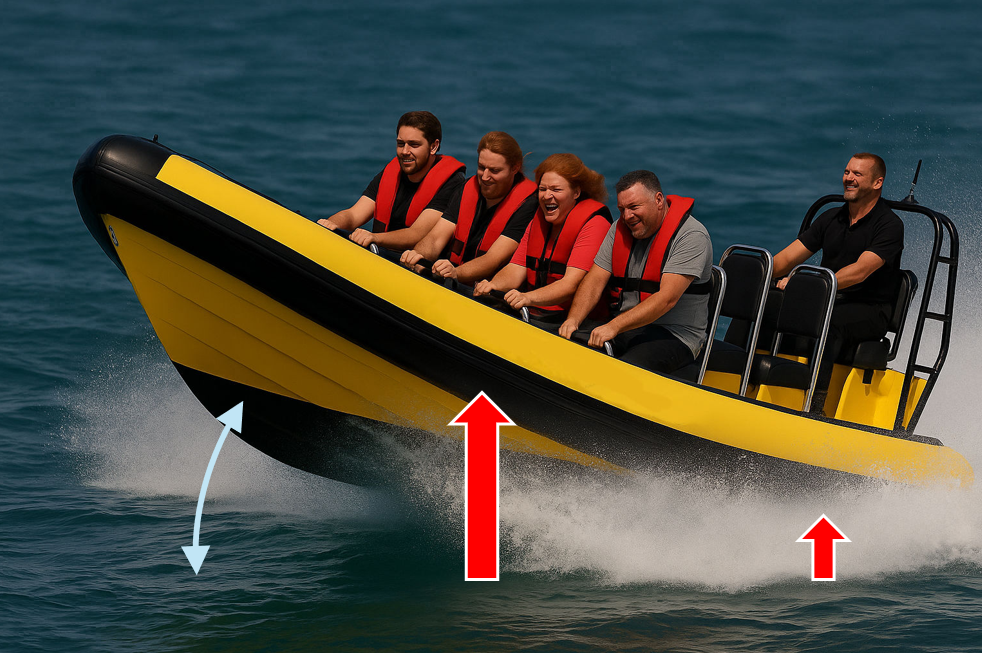
When a high-speed craft meets a wave, the bow rises and falls as the hull rotates around a point further aft. A person seated forward moves through a larger vertical distance and can experience a more severe acceleration than someone near the helm.

The difference is influenced by seating position, speed, sea conditions, passenger loading, posture, support and the ability to brace. A comfortable ride at the helm does not prove that passengers at the front are experiencing the same conditions.

  • Forward seating position
  • Speed and sea conditions
  • Passenger loading
  • Posture, seating and handholds
Passenger RIB illustration showing larger vertical movement and acceleration at the bow than at the helm
Forward passengers can experience greater vertical movement and shock loading than the skipper at the rear.
02

Measure both positions

See what the passengers feel.

VIMMS places measurement at the helm and at the forward passenger position. The dashboard display gives the skipper real-time feedback from along the vessel instead of relying on the motion felt at one seat.

Operator-defined thresholds create a consistent driving standard across the fleet. If conditions change or forward impacts increase, the skipper has information that can support an early reduction in speed, a change of course or another proportionate response.

  • Helm and forward measurement
  • Real-time driver feedback
  • Operator-defined limits
  • A common standard across the fleet
03

Evidence from real operation

One boat. Different exposure.

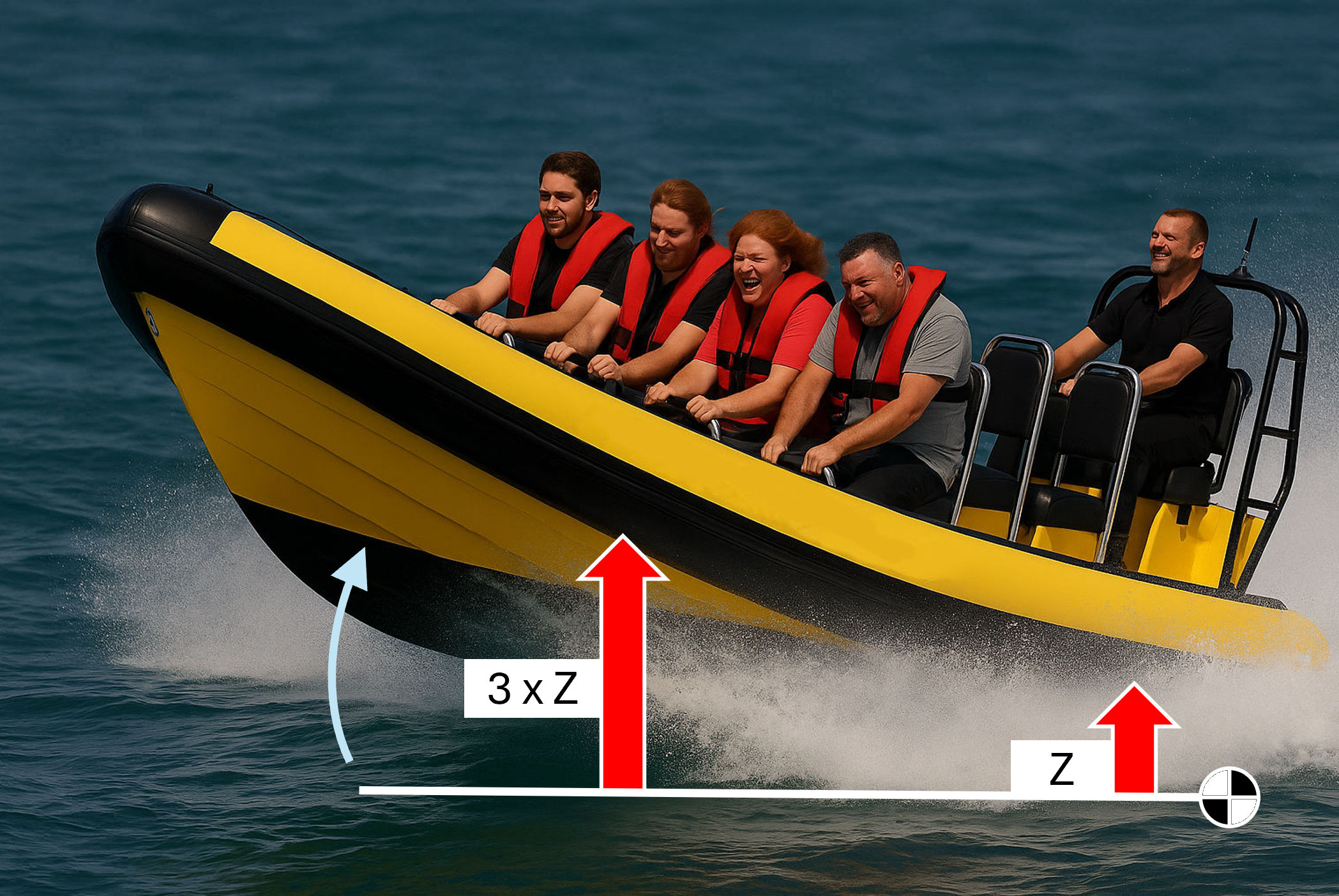
In one monitored passenger-ride example, vertical acceleration at the forward passenger position was approximately three times the level measured near the driver. This is an example from a particular vessel and journey, not a fixed ratio for every boat, but it shows why the driver's experience alone is not a reliable measure of the passenger ride.

The retained journey record connects impacts with time, speed, position and operating context. Operators can compare trips, review unusually severe events and use the evidence to improve operating practice and training.

  • Compare positions on the same journey
  • Review time, speed and location
  • Identify severe events
  • Support training and incident review
Passenger RIB illustration showing an example with vertical acceleration at the bow three times that at the rear
A monitored example illustrating approximately three times the vertical acceleration at the forward passenger position.
04

From evidence to action

Manage the ride before discomfort becomes injury.

Useful monitoring should lead to action. Evidence can inform speed and route decisions, passenger placement, safety briefings, seating and handhold reviews, skipper training and the operating limits used for different conditions.

The MAIB investigation into the serious injury aboard Lundy Explorer identified the highest shock loads at the front of the RIB. Its recommendations included assessing and mitigating the risks of seating people in the front third of high-speed craft and installing sensors that provide real-time measurement of forces in the forward section.

  • Respond as conditions change
  • Review passenger position and support
  • Improve briefings and training
  • Retain evidence of the operational response

Discuss your operation

Turn the question into evidence.

Arrange a demonstration